Madrid Food Guide 2026: Where Locals Eat (Best Tapas, Cocido & Markets)
◆Quick Facts
Why this route matters
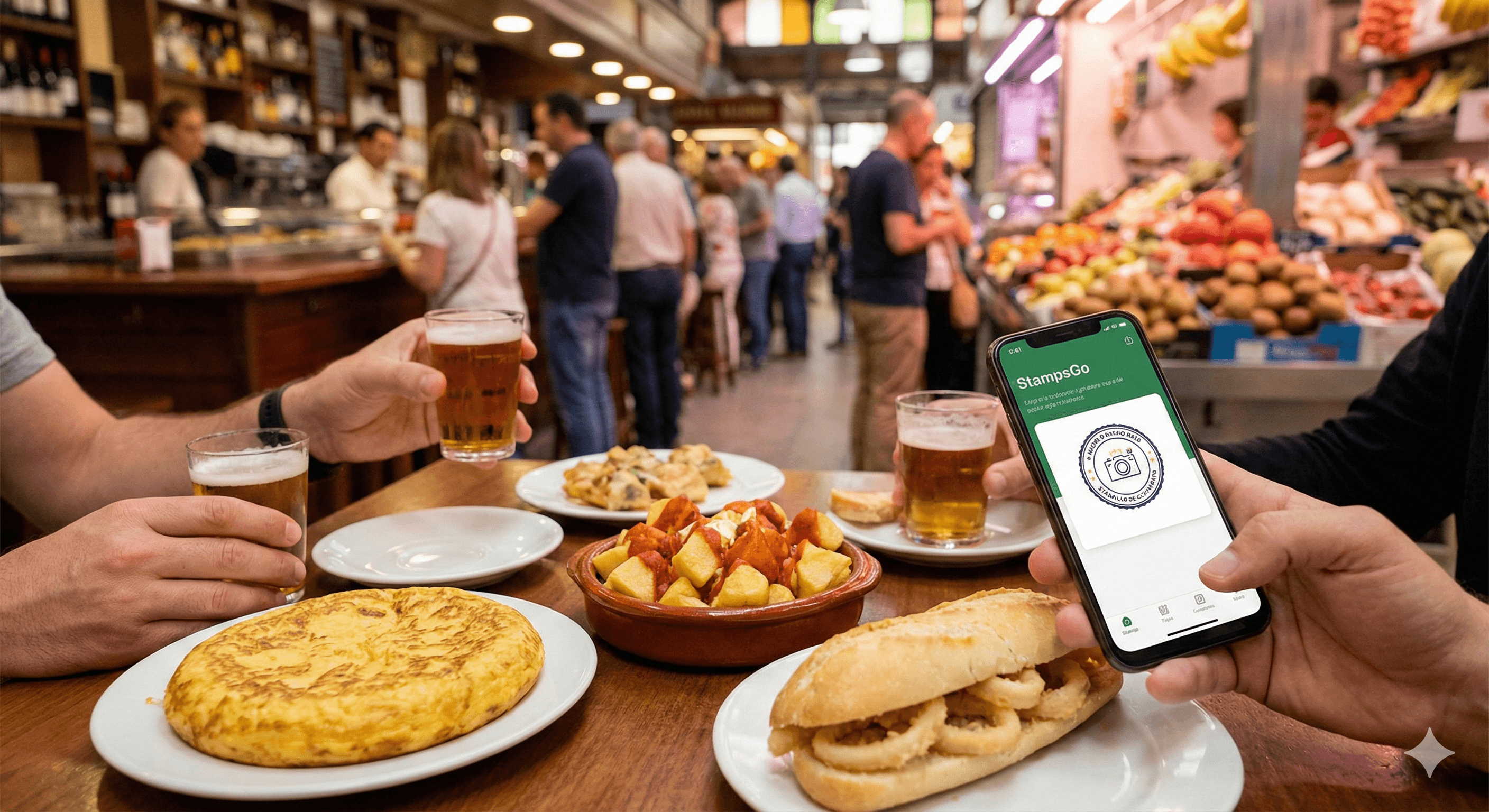
Madrid food guide 2026. Where to eat cocido madrileño, best tapas, calamari sandwich, cheap menu del dia. Local tips included.
Madrid Food Guide: From Cocido to Calamari Sandwich
Madrid does not cook from its soil, but from its history. Unlike the Basque Country or Andalusia, Madrid's culinary identity was born when Philip II named it the capital: a city that learned to absorb, assimilate, and refine products from all of Spain.
Why Madrid Food is Unique
Madrid is the world's largest "inland port." For centuries, muleteers brought fresh fish from Galicia, chorizos from Salamanca, and saffron from La Mancha. Madrid cuisine is the result of this convergence: hearty dishes to combat the cold of the meseta, elevated by the ingenuity of palace kitchens and neighborhood taverns.
There is a secret ingredient: Madrid water. Water from the Canal de Isabel II, filtered through the granite of the Sierra de Guadarrama, is so soft that the chickpeas in cocido cook perfectly and churro dough becomes light as air.
Cocido Madrileño: An Opera in Three Acts
The Hidden History
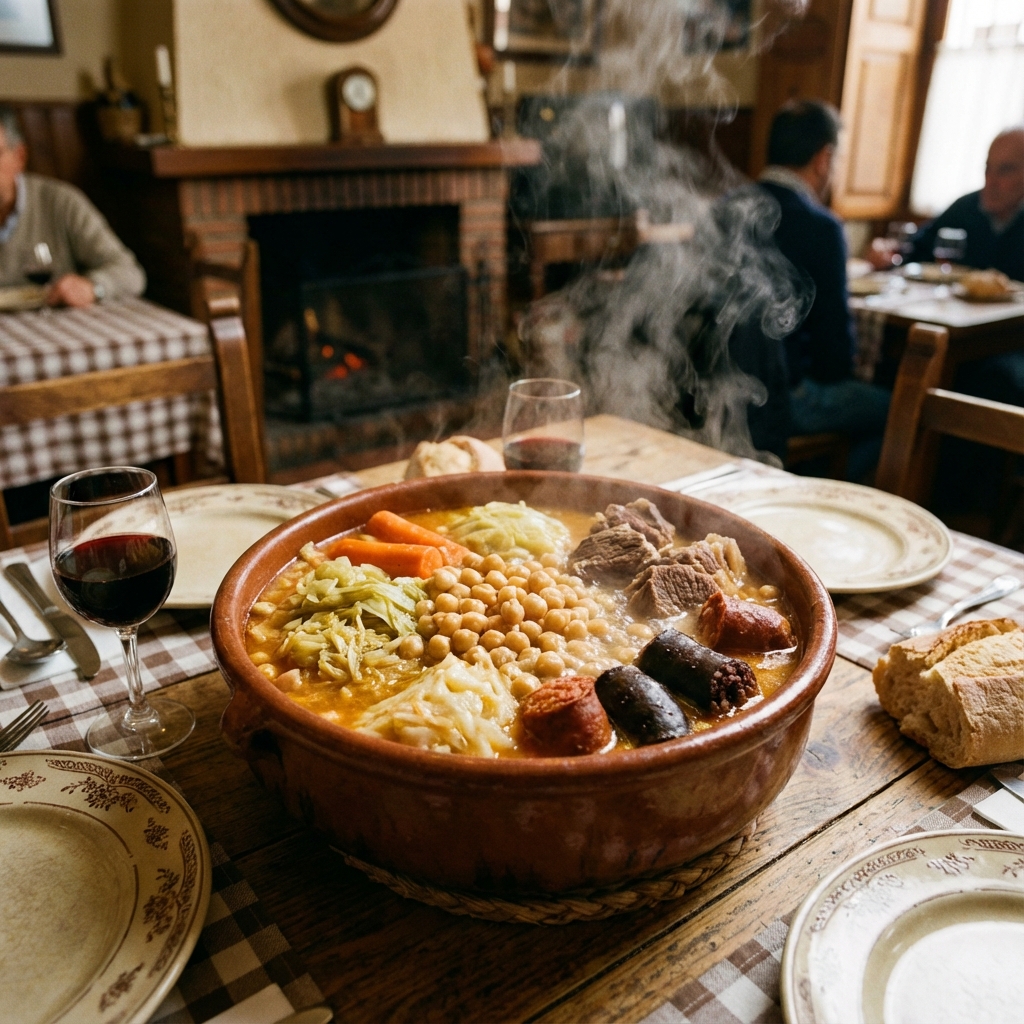
Cocido descends from the Sephardic adafina, the Jewish stew slow-cooked during the Sabbath. When the Inquisition persecuted conversos, they added pork—bacon, chorizo, blood sausage—to publicly demonstrate their conversion. Thus the modern cocido was born: a dish bearing the weight of history.
The Ritual of the Three Courses
| Course | Contents | Ritual |
|---|---|---|
| First: Soup | Broth with vermicelli | Served piping hot, infused with the flavor of the meats |
| Second: Chickpeas | Chickpeas, cabbage, carrots | Chickpeas must remain whole but buttery |
| Third: Meats | Beef shank, pork belly, chorizo, blood sausage, chicken | The meat feast, sometimes with "la bola" meatball |
Where to Eat Cocido
Malacatín - The Marathon
Founded in 1895. Their motto is "if you finish it, you don't pay"—a challenge few complete. Portions are titanic, designed for laborers of old. Reservations essential.
La Bola - Tradition
Since 1870, they cook each cocido in individual clay pots over holm oak charcoal. The clay and slow fire create a broth that tastes like "yesteryear." The cocido is served directly in the pot.
Lhardy - The Aristocracy
Founded in 1839 by French pastry chef Émile Huguenin. Here cocido is served in silver tureens, in 19th-century mirrored salons. It was Queen Isabella II's favorite.
Casquería: The Noble Art of Offal
In Madrid, casquerías (offal) were historically food for the common people. Noble cuts went to the court; the scraps stayed for the taverns. Today, they are the emblem of Madrid's castizo character.
Callos a la Madrileña (Madrid-Style Tripe)
The most emblematic offal dish. Unlike Galician or Italian tripe, Madrid's is intensely red and viscous.
Ingredients: Tripe, snout, trotters (essential for their collagen)
The secret: 24+ hour cooking. The sauce must "seal the lips"
The sofrito: Onion, garlic, sweet and spicy paprika, chorizo and blood sausage
Where to try: Casa Rivera (classic), La Tasquería (Michelin version).
Oreja a la Plancha (Grilled Pig's Ear)
An exercise in textures: the crunch of cartilage, the chew of skin. It's boiled, cubed, and fried at high heat until crispy. Served with brava sauce or garlic oil.
The temple: La Oreja de Jaime, near Sol. Tiny bar, ultra-crispy ears, sauce with the perfect kick.
Gallinejas and Entresijos
The most extreme offal: lamb intestines fried in their own tallow until they become "meat chips." Gamey, greasy, addictive. Only found at specialized fryers in neighborhoods like Vallecas or at the San Isidro festival.
The Sea Paradox: Madrid the Inland Port
Bocadillo de Calamares (Calamari Sandwich)
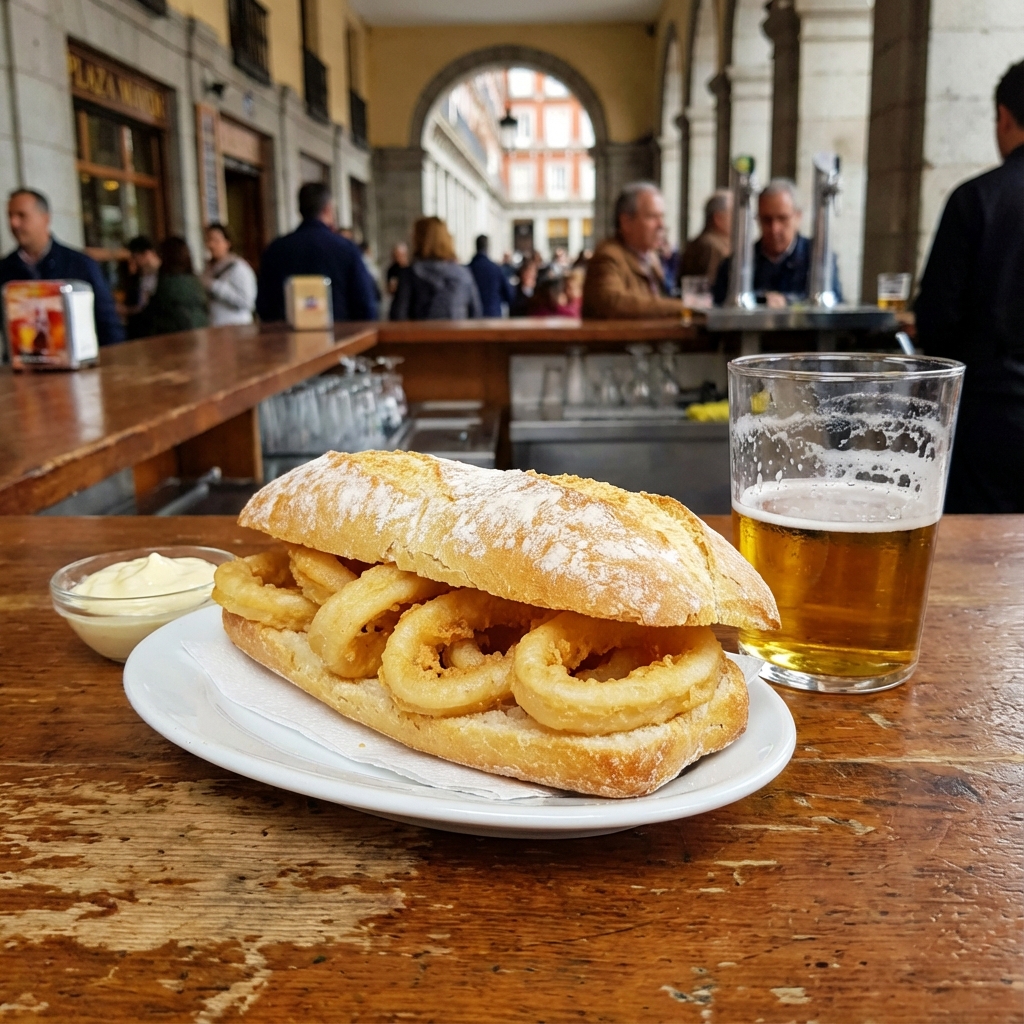
How can the most famous street food of a city 300km from the sea be a calamari sandwich? The answer: religion and logistics. For centuries, Friday abstinence and Lent created structural demand for fish. Muleteers established relay routes bringing fresh fish in under 24 hours.
The sandwich is simple: battered squid rings, fried in olive oil, stuffed into crusty bread. Eaten dry or with a squeeze of lemon. Mayonnaise is a modern (and controversial) evolution.
The Sacred Triangle (Plaza Mayor)
La Campana: Speed and freshness guaranteed. Standing room only.
La Ideal: The most generous portions, squid overflowing from the bread.
El Brillante (Atocha): First or last meal for train travelers.
Casa Labra - The Temple of Cod
Founded in 1860, Casa Labra has two claims to fame: their Soldaditos de Pavía (battered cod with red pepper) and being the founding location of the PSOE party in 1879. Unique system: queue for food (ticket booth), another for drinks (bar). Their cod croquettes are canonical.
Gambas al Ajillo (Garlic Shrimp)
Simplicity elevated: shrimp cooked in bubbling oil with sliced garlic and dried chili. Served sizzling in a clay pot.
La Casa del Abuelo (1906) claims to have invented them. After the Civil War, bread shortages forced them to specialize only in shrimp. They still serve their sweet Toro wine with every portion.
The Potato and Egg Canon
Tortilla de Patata (Spanish Omelette)
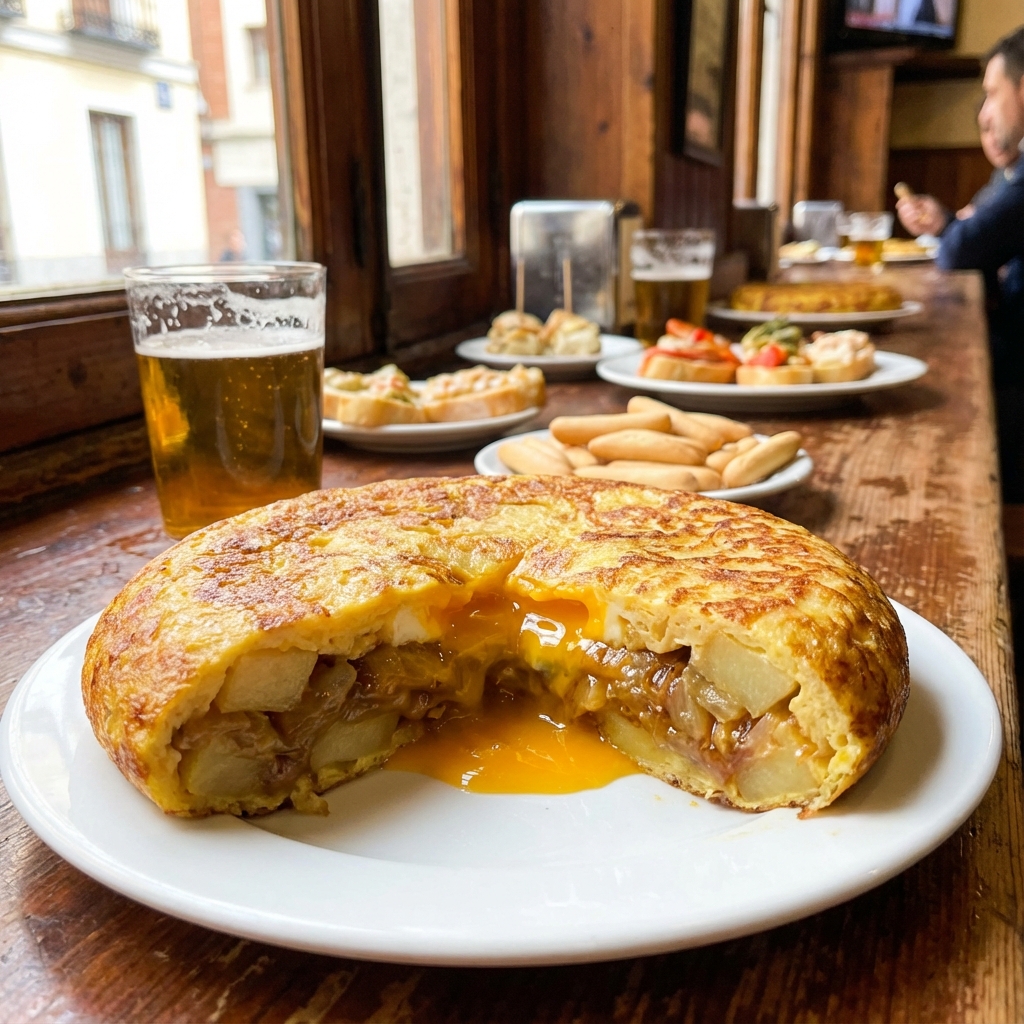
In Madrid, the ideal tortilla is with onion and barely set: the egg should form a sauce binding the potatoes, not a solid block.
Casa Dani (Mercado de la Paz)
Considered the best tortilla in Spain. They produce hundreds daily. The secret: industrial heat that deeply caramelizes the potatoes before folding with the egg. You need bread to soak up the liquid center.
Juana La Loca (La Latina)
Different school: caramelized onion confit, sweeter and denser. Served as a pintxo.
Huevos Rotos at Casa Lucio
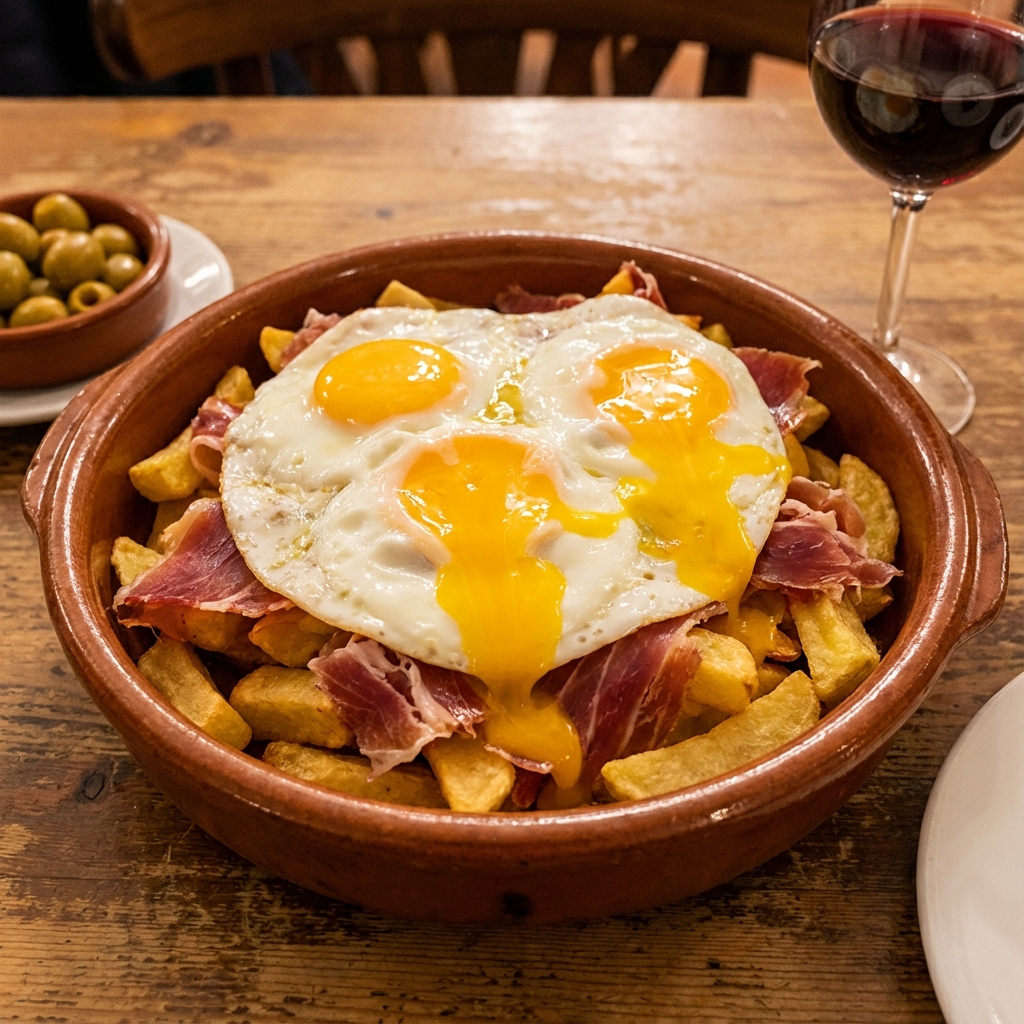
The dish that turned a La Latina bar into legend. Fried potatoes (more confit than crispy) topped with fried eggs. The waiter "breaks" the yolks at the table, coating everything in liquid gold.
Lucio's secret: Quality of olive oil and exact temperature—set whites, perfectly liquid yolks. Kings, presidents, and celebrities have passed through here.
Authentic Patatas Bravas
Authentic Madrid brava sauce contains NO tomato. It's a velouté of bone broth, flour, vinegar, and lots of paprika (sweet and spicy). The result is intense orange, not red.
Docamar (Quintana)
The Vatican of bravas. Same secret recipe since 1963. They consume tons of potatoes weekly. The sauce is sold bottled. This is the standard against which all Madrid bravas are measured.
The Croquette: Béchamel as Art
The Spanish croquette is a béchamel fritter, not potato. The Madrid ideal: crispy outside, dangerously liquid inside.
Santerra
"Champion of Champions" croquette winners. They use panko for a light crunch and béchamel infused with Iberian ham fat.
Casa Julio (Malasaña)
Classic tavern that gained fame (partly from a U2 photo shoot). Gourmet variety: spinach with gorgonzola, mushrooms. Authentic tavern atmosphere.
Sweet Calendar: Seasonal Pastries
Churros and Porras at San Ginés
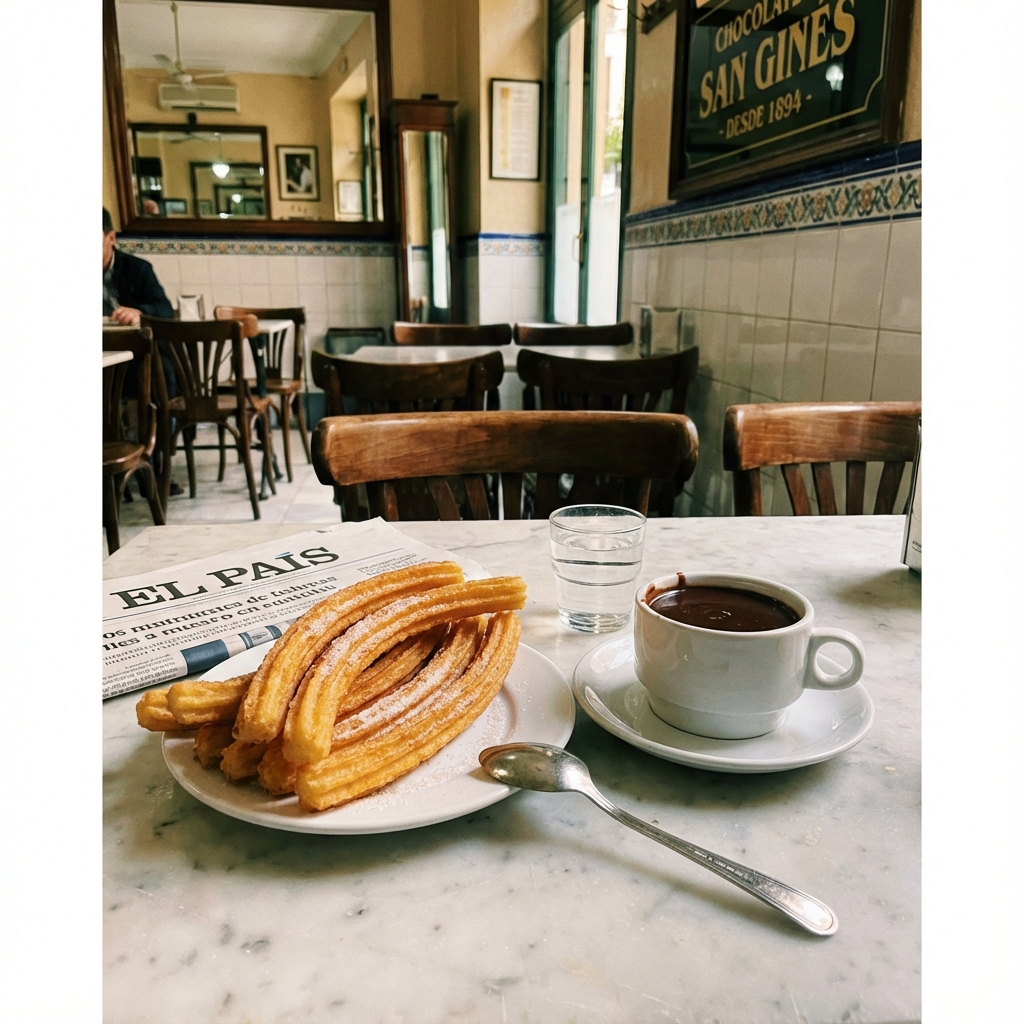
| Type | Characteristics |
|---|---|
| Churro | Thin, crunchy, loop shape. Flour-water-salt dough. |
| Porra | Thick, spongy, with leavening. Absorbs more chocolate. |
Chocolatería San Ginés (1894): Open 24 hours. Chocolate so thick you must dip, not drink. Immortalized in Valle-Inclán's literature.
Torrijas (Holy Week)
Stale bread soaked in milk (or wine), dipped in egg, fried, and coated in sugar, cinnamon, or honey. Though traditional for Easter, La Casa de las Torrijas serves them year-round.
Rosquillas de San Isidro (May 15)
For the festival of Madrid's patron saint. Four canonical varieties, all anise-based:
Tontas (Dumb): No coating. Austere and dry.
Listas (Smart): Lemon and egg glaze. Most popular.
Santa Clara: Dry white meringue coating.
Francesas (French): Coated with chopped almonds.
Practical Guide: Eating Like a Madrileño
The Meal Rhythm
| Time | Meal |
|---|---|
| 08:00 - 11:00 | Breakfast: Café con leche and toast with tomato, or churros |
| 12:30 - 14:30 | La Hora del Vermut: Vermouth with olives, chips |
| 14:30 - 16:30 | Lunch: Menu del día or single dish |
| 18:00 - 20:00 | Merienda: Coffee, sandwich, or pastry |
| 21:00 - 23:00 | Dinner: Lighter, tapas or shared plates |
Essential Vocabulary
Ración: Sharing plate (generous size)
Tapa: Small portion, sometimes free with drink
Pincho/Pintxo: Individual bite on bread
Casquería: Offal/organ meats
De grifo: From the tap (beer or vermouth)
Frequently Asked Questions
What is the most typical dish in Madrid?
Cocido Madrileño is the flagship dish. But in daily life, Madrileños eat tortilla de patata, huevos rotos, and cañas with bravas.
Where to eat cheap and well?
Menús del día (2-3 course lunch for €12-15) are the best-kept secret. Look for bars away from tourist zones.
Why are there napkins on the floor in some bars?
In traditional tascas, throwing napkins, olive pits, or shells on the floor was a sign of approval: dirty floor = busy bar = fresh food.
Is tap water safe?
Yes, absolutely. Madrid tap water is among the best in Europe thanks to the granite geology of the Sierra de Guadarrama.
To complete your experience, check our Madrid Drinks Guide and the Rooftops Guide.
🍽️ Ready for Your Gastronomic Adventure?
Open the map and discover Madrid's best restaurants and bars. Collect stamps at each stop and eat like a true Madrileño.
View Restaurant MapRate this guide
Average rating: 4.7 out of 5(based on 89 ratings)
Share and save
Share this route with friends or save it to continue on mobile.
Ready to explore?
Collect digital stamps at these locations and more with StampsGo. Discover hidden gems and create lasting memories.
You might also like
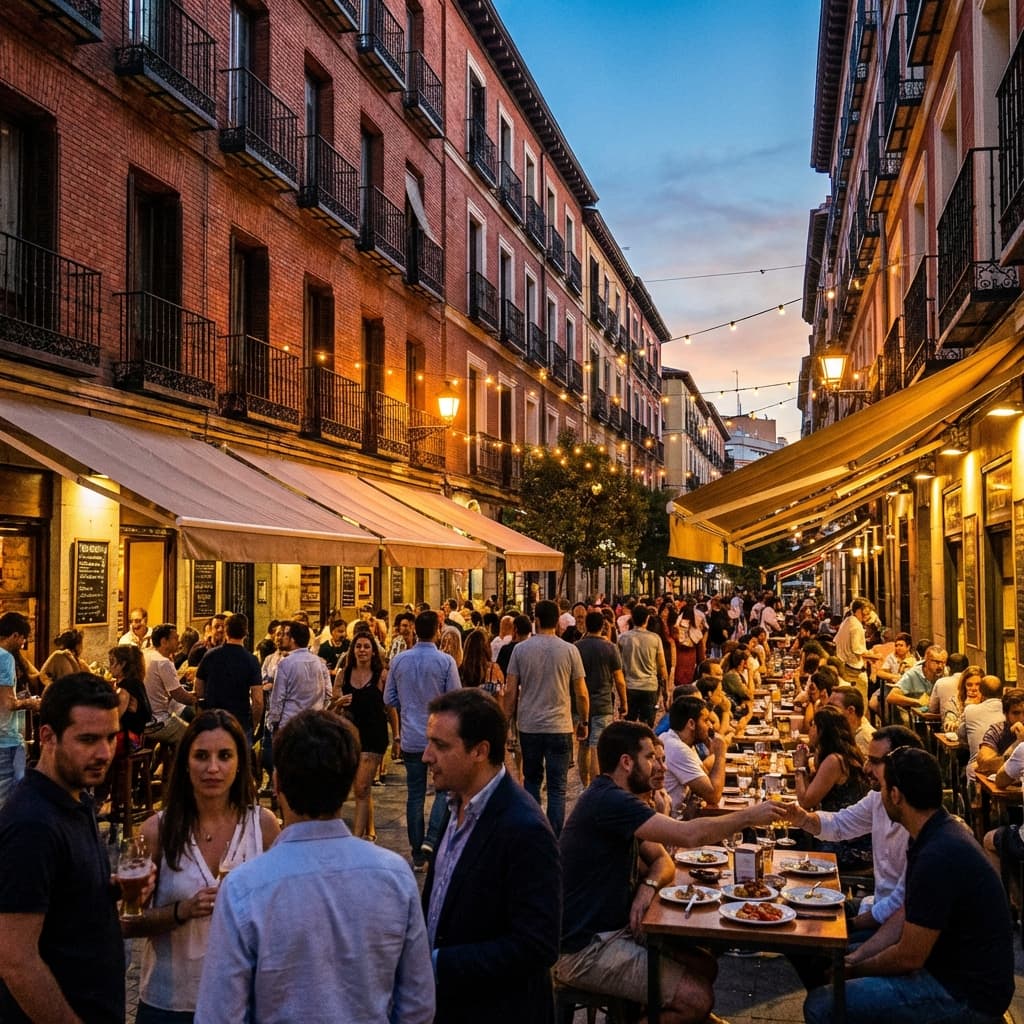
Ponzano Nightlife Guide: Madrid's Golden Mile 2026
Ponzano is not just a bar street; it's a sociological phenomenon that has generated its own verb: "Ponzaning". This guide takes you from traditional vermouth to haute cuisine.
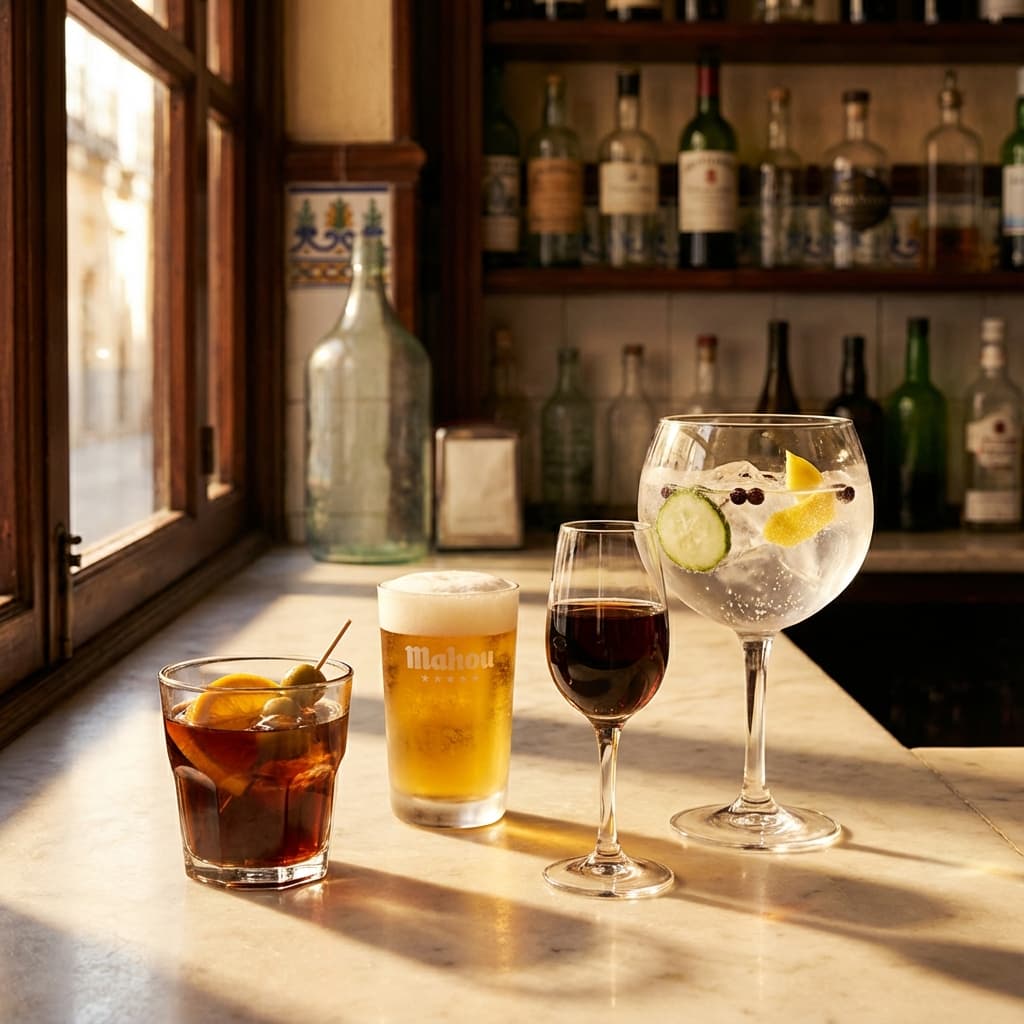
Best Bars in Madrid (2026): The Ultimate Drinks Guide (Rooftops, Vermouth & Tapas)
Madrid is a city that does not merely consume beverages; it inhabits them. From Sunday vermouth to summer tinto de verano, discover the authentic Madrid drinking culture.